Cabbage
Black Rot in Cabbages: Symptoms, Causes, and How to Control It
May
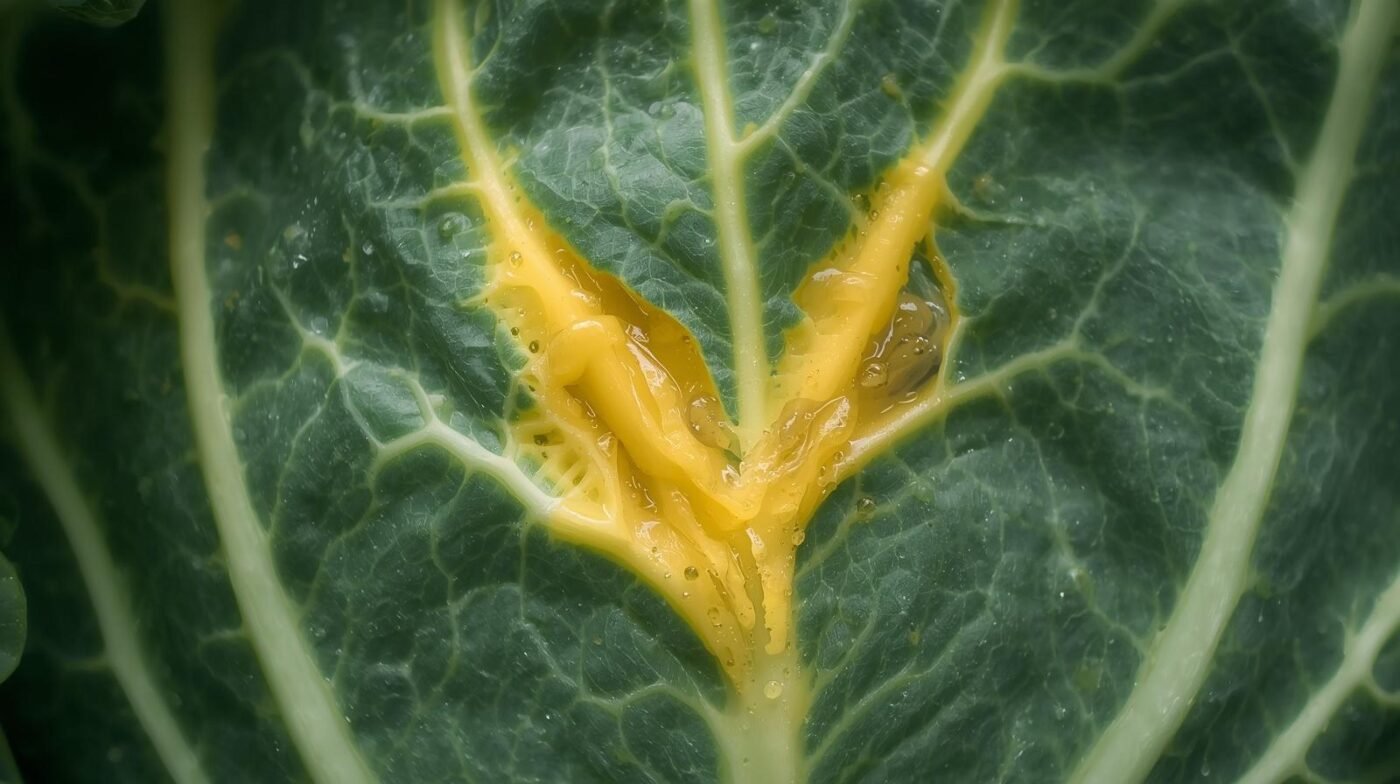
If your cabbage leaves are turning yellow along the edges and the veins look like someone traced them in black ink, you are almost certainly looking at black rot in cabbages. It is one of the most destructive bacterial diseases of brassicas in Kenya, and a single infected field can lose half its yield in a few weeks if nothing is done.
This guide walks through what black rot in cabbages actually is, how to spot it early, what causes it, and the practical steps that work to stop it spreading.
What Is Black Rot in Cabbages?
Black rot is a bacterial disease caused by Xanthomonas campestris pv. campestris, often shortened to Xcc. It attacks every member of the brassica family — cabbages, kale (sukuma wiki), cauliflower, broccoli, and even the wild mustards growing along field edges. For a full scientific datasheet on the pathogen, see the CABI compendium entry on Xanthomonas campestris.
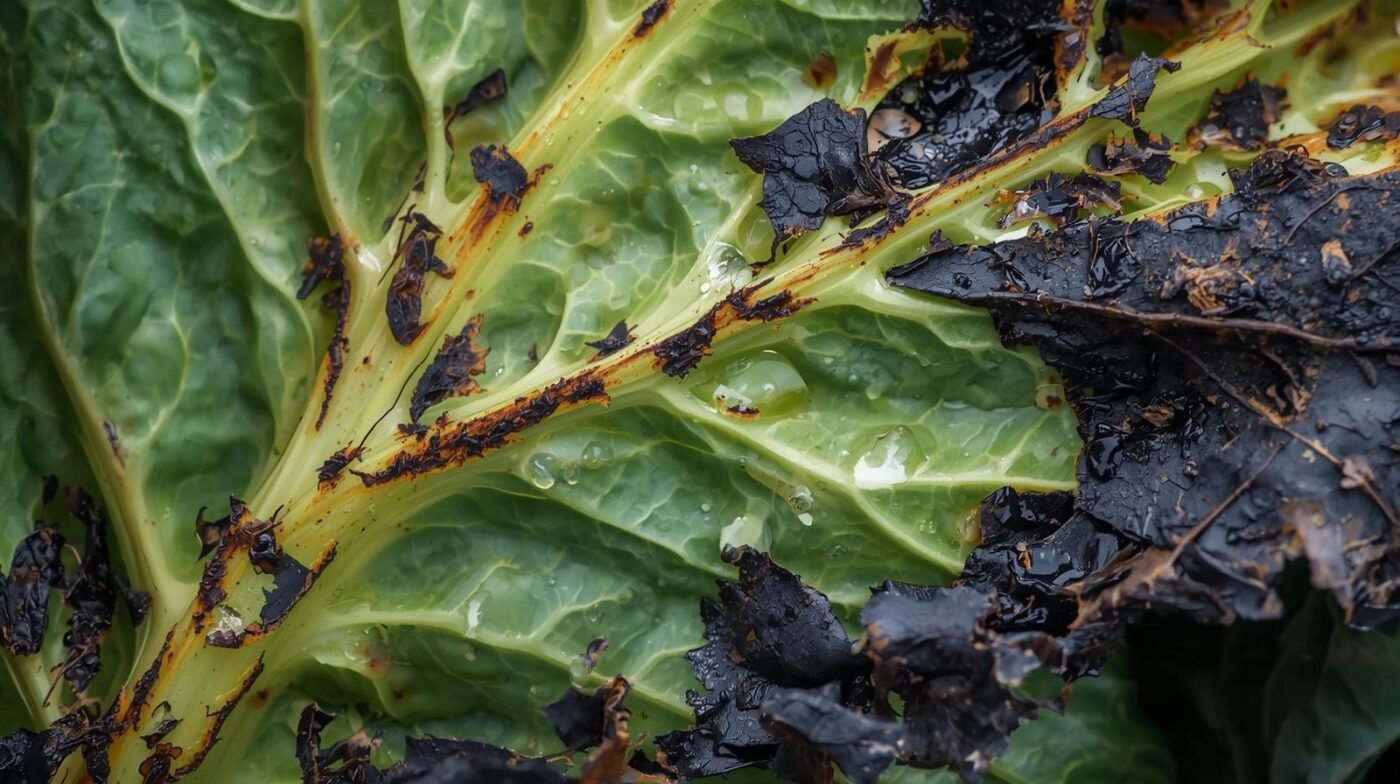
The bacteria slip into the plant through the hydathodes, tiny pores at the leaf margin where water is exuded overnight. Once inside, they travel down the veins, blackening the vascular tissue and cutting off water and nutrients to the leaf. Severe infections rot whole heads in the field or in storage.
In major cabbage-growing zones like Kitale, Limuru, Molo, and Mau Narok, black rot losses commonly reach 30 to 50 percent during wet seasons. The damage is even worse when farmers unknowingly plant infected seed.
What Causes Black Rot in Cabbages?
The pathogen Xanthomonas campestris is the direct cause, but the disease only takes hold when conditions and farm practices give it an opening. The main drivers are:
- Infected seed. Most outbreaks begin with seed-borne bacteria. This is by far the biggest culprit.
- Warm, wet weather. The bacteria multiply fastest at 25 to 30°C with high humidity, which matches conditions during the long rains.
- Overhead irrigation. Water splashing from leaf to leaf moves bacteria across the field within hours.
- Mechanical damage. Insect feeding, hailstones, and rough weeding create wounds that bacteria exploit.
- Crop debris. Old cabbage stalks left in the field can harbour the pathogen for up to two years.
- Cruciferous weeds. Wild mustards and shepherd’s purse around the field serve as quiet reservoirs.
Symptoms of Black Rot in Cabbages
Early symptoms are easy to miss if you are not actively looking. Walk your field at least once a week and check the lower and outer leaves first. The CABI Plantwise factsheet on cabbage black rot has clear photo references you can use when comparing field symptoms.
Early symptoms
- V-shaped yellow lesions at the leaf margins, with the point of the V aiming inward toward the midrib
- Lesions starting small (a few millimetres) and expanding over seven to ten days
- A faint yellow halo around the affected tissue
Advanced symptoms
- Veins inside the V turning dark brown to black — the classic giveaway
- Leaves yellowing, wilting, and dropping early
- A black ring in the vascular tissue when you cut the stem near the base
- Heads failing to form properly, or rotting in storage with a foul smell as secondary bacteria move in
If you see the V-shape with blackened veins, the diagnosis is essentially confirmed. Other cabbage problems like downy mildew or Alternaria leaf spot do not produce that pattern — our guide to common problems in cabbage farming covers how to tell them apart.
How Black Rot Spreads in the Field
Understanding how the disease moves is what lets you actually cut the chain.
- Seed to seedling. Contaminated seed produces infected transplants, so the disease arrives before the crop is even in the ground.
- Plant to plant. Rain, irrigation, and even morning dew carry bacteria from infected leaves onto healthy ones.
- Worker to plant. Hands, tools, boots, and clothing pick up bacteria from wet infected leaves and transfer them down the row.
- Insect to plant. Diamondback moths, aphids, and flea beetles chew entry points and sometimes carry bacteria on their bodies. Our guide on how to manage pests and diseases in cabbage farming walks through controlling these insects as part of an integrated programme.
- Soil and debris. Old residues keep the pathogen alive between seasons.
How to Prevent Black Rot in Cabbages
Prevention is dramatically cheaper than control. By the time you are spraying, the yield is already gone.
1. Start with certified, disease-free seed
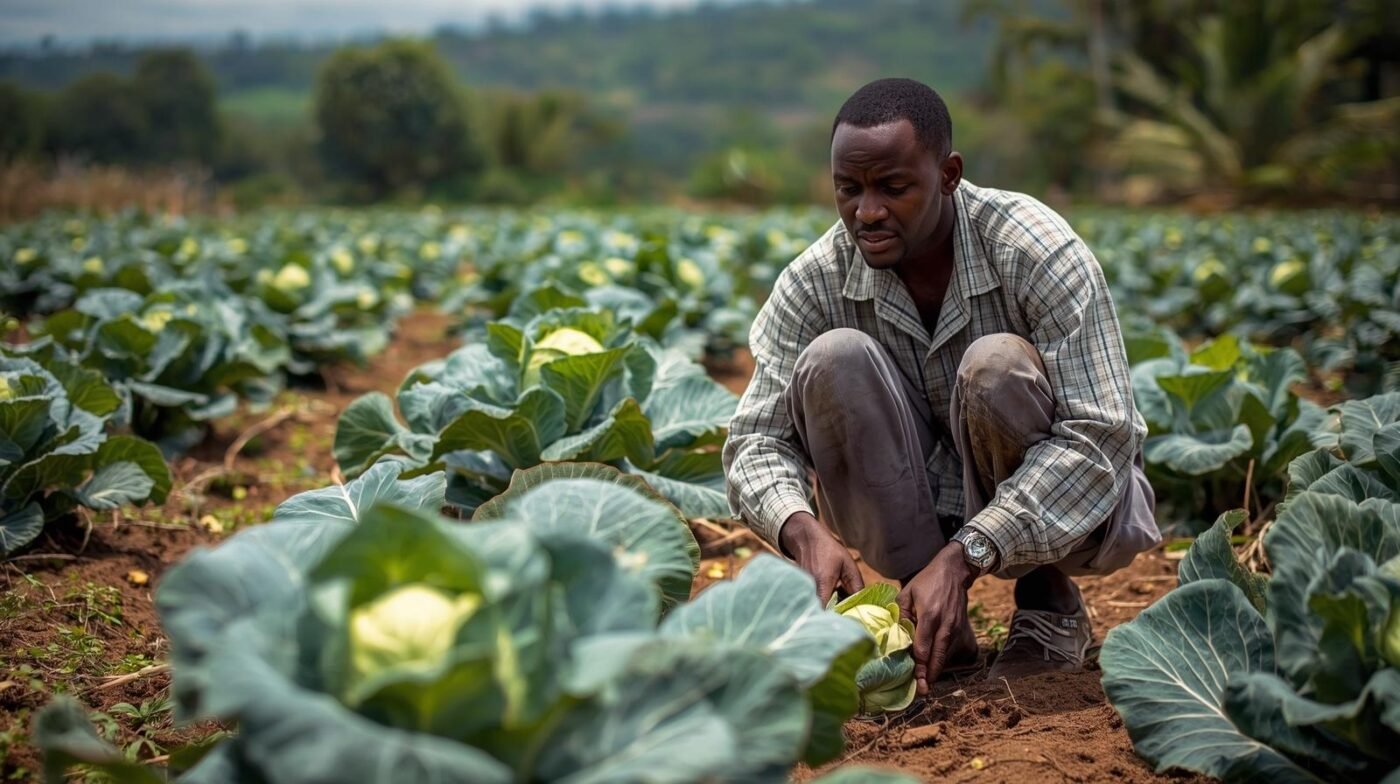
This is non-negotiable. Buy from reputable seed companies and stop recycling seed from your own crop. Our certified cabbage seedlings for large farms are raised under strict nursery hygiene specifically to reduce the risk of seed-borne diseases like black rot. If you are sourcing seed independently, our guide on how to choose the best cabbage seedlings explains what to look for.
2. Treat seed with hot water
If you are unsure of seed quality, hot water treatment kills both surface and internal bacteria. Soak seed in water held at exactly 50°C for 25 minutes, then dry in shade. Use a proper thermometer — too hot kills the seed, too cool lets the bacteria survive.
3. Rotate your crops
Do not plant brassicas on the same plot for at least two seasons. Rotate with cereals like maize or wheat, legumes such as beans and soybean, or onions. Without a host, the bacteria starve.
4. Manage water carefully
Switch from overhead sprinklers to drip irrigation where possible. If overhead is your only option, water early in the morning so leaves dry quickly.
5. Control cruciferous weeds
Pull out wild mustards and similar brassica weeds inside and around the field before they flower and spread seed.
6. Sanitise tools and movement
Wash tools between fields. Avoid walking through wet cabbage rows — wait until the dew lifts.
7. Choose resistant varieties
Several hybrids now offer moderate to good tolerance to black rot in cabbages. Talk to your seed supplier about varieties suited to your altitude and rainfall pattern, and check our breakdown of the top cabbage varieties for Kenyan farmers for current options.
How to Treat Black Rot in Cabbages
Once the disease is in the field, you are managing it, not curing it. Bacterial diseases do not respond to fungicides, and no chemical will reverse infection. You can, however, slow the spread and save much of the crop.
Rogue infected plants
Pull out and burn the worst-affected plants as soon as you see them. Do not compost them. Work on a dry day with clean tools.
Apply copper-based bactericides
Copper hydroxide and copper oxychloride sprays suppress bacterial multiplication on the leaf surface. They do not cure infected tissue, but they protect healthy leaves from new infection. Spray every seven to ten days during wet weather, following label rates exactly. Overuse builds copper resistance and damages your soil over time.
Boost plant nutrition
Healthy plants resist infection better. Make sure your crop has adequate calcium and potassium, with balanced nitrogen. Avoid excess nitrogen, which produces soft tissue more vulnerable to bacterial attack.
Improve air circulation
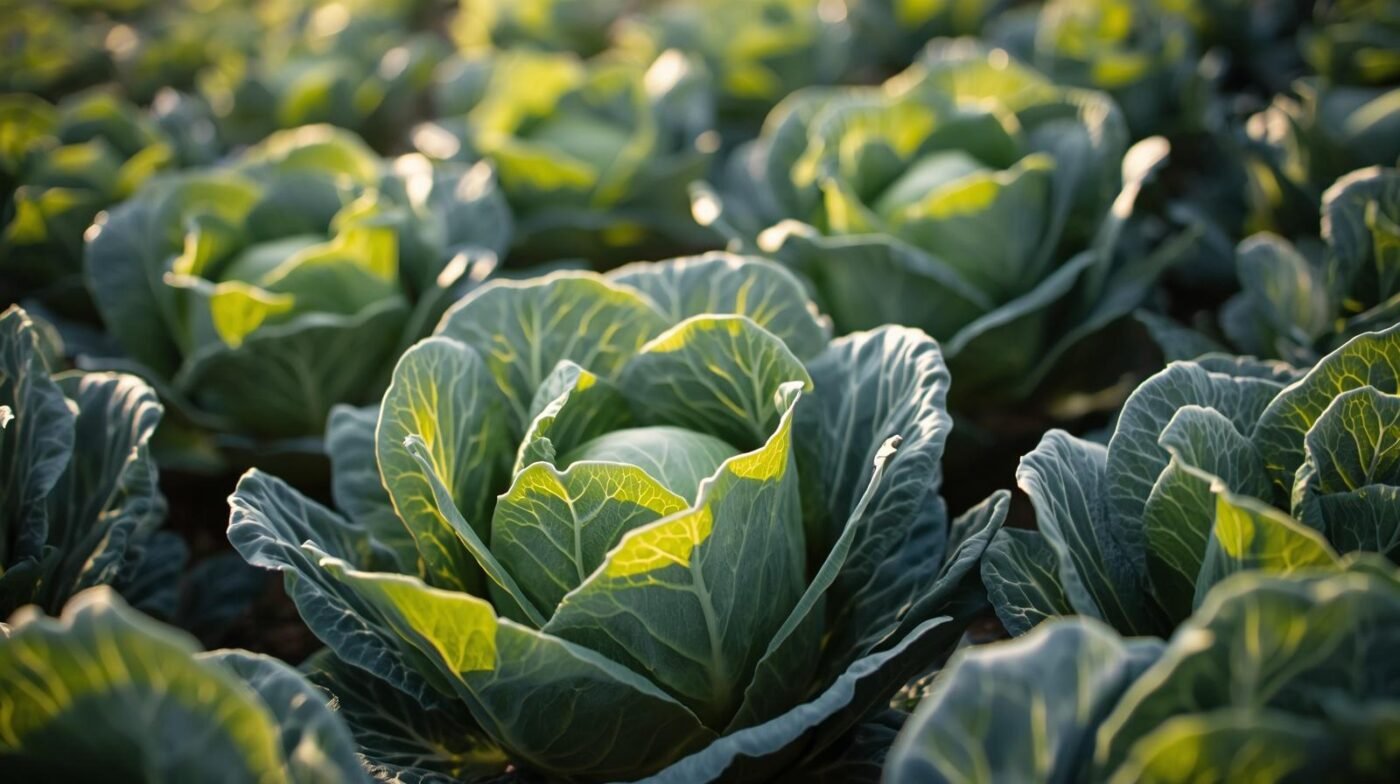
If plants are too close, thin them or remove lower leaves so air moves through the canopy. Drier leaves mean less bacterial spread. Our cabbage spacing recommendations cover the right distances for different varieties and field sizes.
Practise post-harvest sanitation
After harvest, plough in all residues immediately or remove them entirely. Do not leave stalks standing in the field.
Best Cabbage Varieties with Black Rot Tolerance
No commercial variety is fully immune to black rot in cabbages, but some hold up far better than others under Kenyan conditions. Hybrids from Syngenta, East-West Seed, Bejo, and Seminis include lines bred for tolerance. Popular options like our Gloria F1 cabbage seedlings carry useful disease resistance and perform consistently in high-altitude Kenyan conditions. Ask your local agro-dealer for varieties currently performing well in your area, and check trial reports from the Kenya Agricultural and Livestock Research Organization (KALRO) before committing serious acreage to anything unfamiliar.
A Final Word for Cabbage Farmers
Black rot in cabbages is manageable, but only if you treat prevention as the main strategy and reaction as the backup. Clean seed, smart rotation, careful water management, and weekly scouting will protect more of your crop than any spray programme ever will.
If you have spotted symptoms in your field today, act now. Tomorrow, the bacteria will already have moved another row down.
Frequently Asked Questions
Is black rot in cabbages the same as soft rot?
No. Black rot is caused by Xanthomonas campestris and produces V-shaped yellow lesions with blackened veins. Soft rot is caused by Pectobacterium species and turns plant tissue into a watery, foul-smelling mush. The two can occur together, with soft rot moving in after black rot has weakened the plant.
Can I eat cabbages from a field affected by black rot?
Yes. The bacteria do not harm humans. Cut away the discoloured tissue and use the healthy parts of the head. Heads with extensive internal blackening should be discarded, since secondary bacteria may have made them unsafe or unpalatable.
How long does black rot bacteria survive in the soil?
The pathogen can survive on infected crop debris for up to two years and on cruciferous weeds for much longer. Once debris fully decomposes, the bacteria die out. This is why a two to three year rotation away from brassicas is the standard recommendation.
Will fungicides cure black rot in cabbages?
No. Black rot is a bacterial disease, and fungicides have no effect on bacteria. Copper-based bactericides can suppress further spread but cannot cure plants that are already infected.
What temperature kills black rot bacteria on seed?
Hot water treatment at 50°C for 25 minutes kills both surface and internal seed-borne bacteria without damaging viable seed. Precise temperature control is essential — even a few degrees too hot will kill the seed itself.
How do I tell black rot apart from other cabbage diseases?
Look for the V-shaped yellow lesion on the leaf margin with the point aiming toward the midrib, plus blackened veins inside the V. Downy mildew produces yellow patches with grey mould underneath. Alternaria produces dark concentric rings. Fusarium yellows turns whole leaves yellow without the V-pattern.
What is the best time to spray for black rot in cabbages?
Apply preventive copper sprays before symptoms appear, especially heading into the rainy season. Once the disease is visible, sprays only protect new growth — they cannot heal damaged tissue. Spray in the early morning or late afternoon to avoid scorching the leaves.